Showing posts with label improvements. Show all posts

Wednesday, December 12, 2007

Project Pink... or Green... whatever

In response to janeAnne's post about What would you do if money were no object to build a dream green home, I had to expand to a full post.

Here is what I originally responded with in the comments of her post:

If money were no object... but taste was:

  • Active Solar water heating, and power generation.
  • Passive solar heating and cooling.
  • Xeriscaping.
  • Intelligent house systems to reduce energy usage.
  • Landscape design to reduce heating a cooling loads.

I know that there are more expensive technologies, but these could be incorporated into many current houses.

I followed up, answering questions with this comment:

janeAnne - I'm not a huge windmill in the neighborhood fan. I don't want to live under one, and I know that they will have a heavy NIMBY effect (Not In My BackYard).

On the other hand, active solar can be hidden in a house, no matter the style. I have heard of some roofing materials now that incorporate solar photo-voltaic cells and are almost indistinguishable from standard roofing.

Passive solar is an entire design philosophy, but things like sun-rooms and courtyards can be used to distribute air and light around the house. Overhangs can block heat during the summer, but allow solar heating in the winter.

Xeriscaping to save water... and make for a lower maintenance level... obvious choice. But, by using native plants, it can still be quite attractive. The overall landscaping can use little things like trees that block solar heat gain in the yard during the summer, but allow it during the winter. Blocking prevailing winds to allow the house to have a heat island is another option.

And, since I am a tool guy, what could be better than tools and technology turning things off and on, as well as optimizing everything to run more efficiently.

I had another response in the comments, but I'll refrain. So, without further ado, here is the expanded and explained list.

  • Active Solar water heating and power generation

It should probably say active solar power generation and water heating, but... I didn't write that. However, in the summer, the greatest power use is on days with the most sun. So, having solar cells to create electricity to power A/C would just make sense. During the winter, the clear days are also usually the coldest, but instead of electric heat, why not use solar heat gain to heat water, and then circulate the water for radiant heat? The hot water could also be used to preheat the hot water for the house. A boiler running on natural gas could heat the water in place of or in addition to the solar heating.

  • Passive solar heating and cooling

Unlike the first suggestion, this would require incorporation into the design of the home. Passive solar is a great way to heat a property in the winter in sunny areas. The basics are mass and glass. The sun shining into the area is used to heat mass. After the sun goes down, the mass continues to radiate the heat back into the house. Stone, brick, water and other materials with a lot of mass help to smooth the temperatures out. Think of a house with a two story greenhouse on the south side. In the greenhouse, the mass is situated to allow solar heating during the day. As the sun sets, additional insulating material covers the windows to reduce heat loss. The warmth from the sun-room is moved around the house.

During the summer, the light is blocked during the day, and the area is allowed to cool at night. The cool mass will help to lower the temperature in the house during the day. Appropriate overhangs can block the summer sun, but let the winter sun shine in as well.

  • Xeriscaping

Simply put, this is landscaping to reduce additional water needs. Often through the use of native plants, less maintenance and water is used.

  • Intelligent house systems to reduce energy usage

Most of us know that in a two story house, altering the HVAC vents from summer to winter will allow better distribution of air. Window treatments can be used as additional insulators. Operating heating, cooling and water heating systems only during times that they are being utilized also saves resources.

While none of these things are terribly difficult to accomplish, most of us don't fully utilize them because we don't think about it, or it isn't convenient. And, further efficiencies can be obtained from intelligent automation.

  • Landscape design to reduce heating a cooling loads

This has nothing to do with xeriscaping. Through using deciduous tress (with leaves that drop during the winter) the summer sun can be partially blocked from heating the home and yard, but during the winter, the rays of the sun will heat the home and yard. Shrubs and evergreens can be used to block winter winds that cool part of the exterior of the house. In warmer climates, using the right vegetation can reduce the heat island effect of driveways and sidewalks.

None of these things are huge, and all are possible right now for reasonable cost. I know that I didn't have to work with a budget, but oddly, I think that the biggest part of the benefits are available with simpler technologies. The exotic technologies may produce additional savings, but I don't think they are cost efficient... and in some cases I don't think they are attractive or practical.

Wednesday, November 7, 2007

Crawlspaces? Save money...

I'm going to deviate a little from my normal pattern here.

I just ran across a story (printed, sorry no link) about encapsulated crawlspaces. It was touting the energy savings that could be realized by encapsulating the crawlspace. I have seen some claims as high as 15% savings in heating a cooling.

More importantly, I think there are some other benefits that could be realized, especially with older homes. one of the things I see all of the time is missing or incomplete vapor barriers. What happens then is that increased (uncontrolled) moisture can be introduced in to the house through the crawlspace. Even when the moisture barrier is complete and well sealed, the tradition is for the crawlspace to be openly vented to outside air. So... if it rains, that will also introduce uncontrolled moisture into the crawlspace. Of course, all of this moisture is going to end up in the house.

The moisture isn't necessarily bad, but the problem is that areas like crawlspaces don't have good airflow. Moisture + stagnant air = mold. Mold is bad.

So, if we can install a system that tightly controls humidity, lowers counter temperature air infusion, and therefore creates cleaner air that is more efficient to heat or cool, it sounds like a win/win.

The downside is that most of the systems I have heard of cost from $6,000 to $12,000 to install. For many homes, that is money that will neither be recaptured through resale or through energy savings. But, it may be something that decreases contaminants in the inside air.

Food for thought.

Sunday, November 4, 2007

What do you want?

I just have a question.

I'm curious what you are looking for in your next house. You don't have to be in the market right now. I'm just curious how the real world stacks up to the National Association of REALTORS(R) Buyer Profile surveys. I'm not going to list the attributes that they have pointed to, because I don't want to pollute the results. Besides, I have written about the NAR surveys previously.

Feel free to comment, or even email me it you'd prefer.

Saturday, October 20, 2007

What is a better investment?

I was up late, and caught a little bit of the Nightline episode where they featured a "bubble blogger" in California. One of the statements he made was that housing was not a good investment compared to the stock market over the last 30 years. That line was screaming at me.

I went to Google to try and find national average home appreciation rates for the last 30 years. I wasn't able to. I was able to find the annualized appreciation for the last 10 years though. According to S&P (warning, pdf file), average annualized returns for homes were 10.93%, while the stock market was 7.63% for the same period.

So, my next stop was to open up an excel spreadsheet and start making some calculations. I based the interest rate at 8%. I ran the calculation based on 5% down, 10% and 20% as well. I also calculated the return on stock purchases either with cash or on margin (50% down). I thought the numbers would be pretty tough on the stock market, but I didn't think it would come out this lopsided. I based this on a $200,000 investment.

(***Warning, these are not annualized numbers, but overall returns for a 10 year period)

  • For a buyer putting down $10,000 (5%), they would have a 10 year return of 2215%
  • For a buyer putting down $20,000 (10%), they would have a 10 year return of 1145%
  • For a buyer putting down $40,000 (20%), they would have a 10 year return of 610%
  • For a buyer paying cash, they would have a 10 year return of 182%
  • For a stock investor buying $200,000 in the S&P 500, they would have a 10 year return of 109%
  • For a stock investor buying $200,000 in the S&P500 on margin ($100,000 investment, 8% APR), they would have a 10 year return of 137%

Like I said, I was sure that real estate would come out better because of the power of leverage. However, I didn't expect it to be that lopsided.

I'm sure that there are mistakes in my methodology that can be found. I spent a few minutes putting this together, however, there are also a lot of other items that would go in favor of real estate. among the items that I didn't account for that would increase the real world rate of return for real estate are these:

  • Home Mortgage Interest Deduction
  • Value of rent (you can live in the house, but not in the stock)
  • Lack of volatility (S&P rated homes at 2.07% v. stocks at 15.28% volatility)

Of course, there are a few items that would offset these:

  • Home maintenance
  • Utilities
  • Repairs
But, I would still argue that home ownership is CLEARLY the first step towards a solid financial future.

Sunday, September 23, 2007

Now let's try some cool garage stuff that won't break the bank

US General BoxIn the last post, I highlighted a few really cool items. Now, I'm going to move the other way and look at some cheap (but still cool) stuff. Of course, I think that the most links I've come across have been regarding tool storage. And, tool storage is a biggie. Personally, I have two bottom boxes (rollers). One is a Craftsman box that I've had for years, and the other is a US General (Harbor Freight) box. The Craftsman is a 26" wide box. It has roller bearings and such. The current cost of the box is about $500. The US General box is a 45" wide box. It also has roller bearings. The regular price is $500, it is usually on sale for $400, and you can find coupons on the net to drive the price down by 10%, 15% or even (rarely now) 20%. I paid $320 + tax for mine. I think I will probably pick up a couple more of these in the next year or two, and use them as my primary cabinet.

Harbor Freight Powder Coating ovenAnother Harbor Freight find is their powder coating oven. The two big options here are to buy a dedicated oven, or renovate your kitchen, and re-utilize some appliances. I would also like to mention that if you are using an oven to powder coat, don't use it for food...Tool Box looking fridge

Continuing the thought about renovating the kitchen, I know more than one person with a dedicated dishwasher in the garage... and it isn't for dishes... and if any of the items that ran through them made it into the kitchen, there would be a bigger mess. I don't know what they are using to clean with, but I do know there are things that can be cleaned with water and then (compressed) air dried.

Now, if we are going to have appliances, we can have cool appliances. You might get a small fridge that looks like a tool box, for about $300. For closer to $1000, one might look into a full sized, garage styled and built refrigerator. Whirlpool has their Garageworks Gladiator line. I should mention that they incorporate a few different technologies than what is used for an inside fridge. These are designed to work in a wider range of ambient temperatures. They also look cool with their other GarageWorks stuff.

Gladiator Fridge

At this point, I was going to insert another nifty product I ran across from TooCoolKits... but the domain is parked and inactive. They made covers that were attached to an older fridge and made it look like a tool box or old gas pump. They weren't supper cheap, but they were a lot less than the cost of a new fridge... that doesn't look like a tool box or an old gas pump.

So... there is your million dollar idea for the day. Make replacement panels for refrigerators to make them look like tool boxes.

Friday, September 14, 2007

S is for Staging

***I'm proud to have a guest host for today. Angel Walker is a professional stager here in the Atlanta area. Here is a quick bio about Angel.

Angel Walker is an Accredited Staging Professional Master™ and the owner of Staging Professionals, LLC. Angel received her training directly from Barb Schwarz, the CEO of Stagedhomes.com. Prior to founding Staging Professionals, LLC, Angel had over 10 years experience in corporate marketing. Angel specializes in Staging occupied homes
in North Atlanta. www.stagingprofessional.com

S is for Staging

There has been a ton of buzz around Staging in recent months. It has been great to see the word getting out about the value Staging can bring to the residential real estate market.

Why Stage?

There is over 9 months of inventory on the market right now. With so much to choose from, Sellers have to do everything they can to make their house stand out among the crowd. Statistics tell us more and more Buyers are shopping online for their next home. Staging prior to listing improves the pictures posted online and creates an inviting feeling for Buyers who view the home in person.

If you were selling your car tomorrow, you would probably get it detailed. When we Stage, we detail the house like you would detail your car. Where is your equity?

There are several myths about Staging, and I would like to dispel a few of them.

Myth #1: Staging is decorating.

Staging is actually the opposite of decorating. Stagers de-personalize a property so that a Buyer can make their own connection to the home. There have been times when I felt like I’d known the Sellers for years after viewing their home. That is not the impression a Seller wants to make upon a Buyer. The goal is to get a Buyer excited about creating their own memories in the house, not reliving someone else’s.

Myth #2: Staging is expensive.

Stagers can work with just about any budget. Sellers have to determine how much time and effort they can put into preparing their home for sale. If money is tight, hire a Stager for a Consultation. This gives Sellers a roadmap of recommendations they can implement themselves.

To make the most impact in the shortest amount of time, hiring a Stager to do the work is the way to go. Many Stagers work in teams. The combined creativity of several professionals trained and motivated to Stage cannot be put into a Consultation. Every time I’ve worked on a Hands-On Staging project, I’ve been blown away by the transformation. The feeling of the property changes. It’s hard to describe in words, but it is what I love most about this industry.

Every Stager sets their own pricing. Find a few Stagers in your area and contact them directly to get a feel for how they work and how they price their services.

Myth #3: I’ll just take down my family photos.

Stagers look at the entire house, up and down, inside and out. If it is included in the sale, the Stager is looking at it. Are the light fixtures full of cobwebs? Is the carpet worn and stained? Is the bathroom too dated for the price range? How does the furniture flow? Stagers point out recommendations to improve the property so that it compares favorably to the competition. The recommendations are prioritized so the Seller can decide what they are comfortable doing within their budget and time frame.

Why hire a Stager?

We love what we do and we bring passion and creativity into every client’s home to assist them in achieving their goal of selling as quickly as possible for the most money.

Angel Walker
Accredited Staging Professional Master
Staging Professionals, LLC
Specializing in Staging Occupied Homes in North Atlanta
www.stagingprofessional.com

Tuesday, September 11, 2007

P is for Pictures

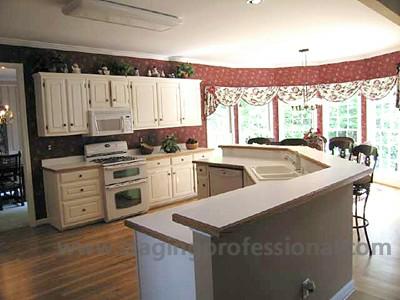
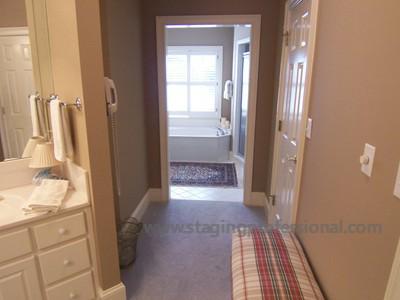
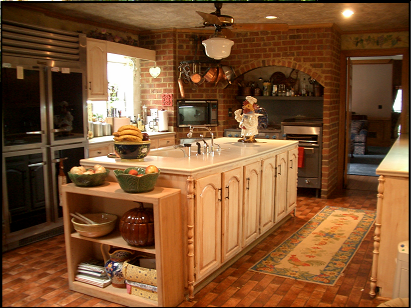
Cofer KitchenIf your listing doesn't have good pics, you'd better make it REALLY cheap. REALLY, REALLY cheap.

84% of buyers these days start their search online. They aren't looking for prose. They want pictures. They want lots of pictures and they want those pictures to be good. If there aren't good pictures from good angles that are lit in a manner to let them see the features they want to see, they move on.

Here in the Atlanta market, there are more than 100,000 homes for sale. Obviously these homes are in a variety of price ranges, and locations. They feature wide ranging levels of amenities and finishes. But, do you think there aren't any other homes competing with yours? If one house has great pictures of a beautiful house, and the next has a picture of the front, or even no picture (the horror!!), do you think that buyers are going to spend their valuable time investigating that house? Keep in mind that there ARE houses with excellent and plentiful pictures in their search as well.

There are several steps that one should go through to insure the best possible result. Cofer Family Room

  • Talk to the agent that is going to list your home. Among the things you should talk with them about are staging and photographs.
  • Get a consultation from a home stager. You might need to spend some time removing wallpaper, painting, or doing other things to show your home in the best light.
  • Suck up your decorating ego. Staging for sale is not all about decorating. It is about showing the house in a manner that lets the buyer move in mentally. Homes that are too personal to the seller might be beautiful, but that doesn't mean they are staged to sell.
  • If you really hate what you were just told by the stager, get a second opinion.
  • Complete the needed work. In some cases, this might mean doing the work, in other cases this might mean hiring the stager to "set" the house.
  • Get pictures. If your agent isn't able to produce quality pictures, get them to bring in a photographer. The higher the price, the more willing your agent should be to bring in a professional photographer. There are some agents that will be able to make great shots, others are pretty challenged. Look at the pictures.
  • Make sure that your listing looks good on the MLS, as well as on realtor.com. Realtor.com is the most heavily trafficked real estate website, and only REALTORS(R) have access. I would also recommend that the listing be "enhanced", which is an extra service that your agent should have.
  • Keep the pictures reasonably updated. Snow in the summer, and spring flowers in the winter are clues that the listing has been sitting.
As with all things real estate, there are variations. But, it should be easy to get the idea. Make sure that YOUR house looks better on the internet than the house you are competing with. Those pictures ARE the first impression.

Saturday, September 8, 2007

M is for Maintenance

Here is a loaded term for a car guy. Maintenance. We do it for our rides, and just about nothing can stand in the way. I've known guys that bordered on religious about changing their own oil. I've seen them pull into a rest area along the interstate, slide under the car and change their oil. A quick refill and clean-up, and they were on their way again. We would never think of leaving something undone.

Houses aren't much different. They need regular maintenance. They don't need oil changes, but they need those air filters changed pretty regularly. Painting, pressure washing, and caulking are all maintenance items to be checked off. There are scores of other things as well. Not only that, but one of the most efficient ways to keep a house up is to take care of anything that pops up. And to take care of it quickly and properly. When things are left undone, or poorly dealt with, the deeper the problems will become. Foreclosures and REO (bank owned properties) are usually the worst about maintenance. When people can't afford their house payment, they generally aren't spending time and money painting or keeping the septic healthy.

When resale time comes around, things can be a little more complicated. Sellers start looking at the payback for the money spent. In some cases, they think that there should be an increase in value for every dollar spent on anything. But, that isn't always the case, and maintenance is one of those times. The flip side is that failure to spend money can detract from the value... and cost money. There is a significant difference between increase and decrease in value (seems obvious enough), but many fail to realize the difference. Let me outline it here.

Generally, when we are talking about property value with a seller or other interested person, we are assuming that the property is reasonably maintained. If there are obvious deficiencies, or the property is visibly rundown, that will probably factor in to the value, but those little things (which do add up will probably get glossed over). But, if the property isn't reasonably well maintained, that expected value starts to slip. If major issues are dealt with, that were previously factored in to the value, it may bump up. But, don't expect that the roof that went on last month costing $15,000 is going to add $15,000 to the value, especially if the previous roof was serviceable. It will make the house more attractive, though.

Finally, buyers notice maintenance. If a house looks great, but the details aren't kept up with, the buyers will wonder what hidden issues there might be. If a house seems to have a tremendous amount of maintenance performed just before listing, the buyers will wonder if there are underlying problems that the sellers might be trying to camouflage.

Just like with our vehicles, don't let it fall behind the maintenance schedule, and there will be fewer issues, and it will be more natural to buyers. The house will also cost less to maintain than it will to repair.

Friday, September 7, 2007

L is for Loft

Did you see that one coming?

Back in my pre-real estate life, I was a photographer and assistant. While working with one of my photographer clients, I had an opportunity to view one of the coolest lofts I've ever seen. It was probably around 1994 or so. At that time, the loft consisted of three levels with the bottom having two roll-up doors. Each of the three levels was about 5,000 square feet, and connected by two large equipment elevators (thinking back, and guessing I would say they were about 15'x30', and had a 15,000 pound capacity). The floors were THICK wood. The actual "planks" were probably a foot thick, and the beams were also massively scaled. This was truly an industrial building. It was empty and unconverted. It was for sale for $400,000.

Later, during my retail photography life, I had the opportunity to see one of the two units that were built in the building. It was split pretty much in half, which was fine. It still had one of the elevators, as well as a roll-up door. There was no real street parking, so the parking was inside. 2500 square feet of parking inside. I would say that the floor shape was 30'x 83'. It was great. the seller had six cars parked in the lower level. Going up to the main level, on the spiral stair he had installed, it had been converted to a living area. It was closed off from the lower level, but there was actually a car parked in the "living room". The kitchen, living room, media room and dining area were all on that level. Of course everything was top of the line. The kitchen would have made a chef blush, and every surface and fixture was not only in the industrial theme, but luxurious. On the top level, the area had been segmented into a few bedrooms. There was an open circular staircase to the main level, and a ladder to the roof deck. It was for sale for $900,000 in 1999. The other side sold earlier that year for $800,000.

Despite my land/garage/space leanings, I've always loved industrial lofts. That one was no exception. I would guess that if it were to come on the market now, it would sell in the $1.5M range.

Sunday, September 2, 2007

G is for Garage

Could it really be about anything else? I am a garage specialist, so of course not.

First, let's get this out of the way. Single car garages are made to store lawn tools and maybe a motorcycle. Two car garages are the minimum an auto enthusiast would consider. Three car garages are starting to get there. When you have indoor parking suitable for six or more, you are in the zone.

Let's talk about attached vs. detached garages.

I recommend both (why can't I put a smiley here?). But, seriously, having both is great. In fact, I'd call it essential if one is going to do much serious work. From both safety and comfort standpoints, the detached garage is better for hard working spaces. Air compressors and tools make a lot of noise. Welders and grinders make dust and sparks. None of these are things that really belong in the house. Also, there are increased fire hazards from welding, plasma cutting, grinding and using torches.

But, the great thing about an attached garage is the convenience. It's right there. No walking in the rain to get to the garage. So, I recommend that enthusiasts have one of each. The daily drivers and the lawn equipment go in the attached garage, and the play toys go in the real garage. All of the heavy tools and heavy work are kept away from the house.

What about style?

For resale, or to keep from running afoul of the Home Owner's association in some communities, it is generally better to keep the architectural style of the garage similar to the home. While there are some exceptions, having a similar style keeps the flow more natural. This is especially true when the detached garage is close to the house. If they are not close, then it doesn't matter nearly as much. However, a steel building will not add as much value (or cost as much) as a matching brick or sided building.

What does an enthusiast want in the garage?

This is a VERY tough question, because different people will have different usages planned for their space. Here is a list of possibilities:

Lots of power available, both 120V and 220V. If there will be a lot of fab work, 220V might be needed for an air compressor, welder, plasma cutter, lift and other high power consuming tools.

Space. We all need space. Floor space, loft space, attic space, shelf space... getting the idea?

Light... lots of light.

HVAC. It gets hot and cold out there. Insulation, too.

A man door. Opening a large garage door to walk in and out allows a lot of heated or cooled air to escape. (I didn't make up the name, and women are allowed to use the same door... a standard sized door is referred to in the biz as a man door)

Nice floor. For those not welding or torching, an epoxy floor might be perfect. Welding a torching will kill that type of floor, but the concrete should still be sealed.

Air Compressor shed. Those things can be loud. Having the shop plumbed for compressed air is a great bonus.

Plumbing. At the very least, there needs to be a sink. A bathroom with a toilet is also handy for a detached garage. A shower would also be nice.

A seriously beefy workbench. And if it has enclosed storage, that is a HUGE bonus. It makes clean-up a breeze.

Friday, August 24, 2007

Real Estate Investing 203 - Shifting Classes and Uses

Back in Real Estate Investing 101, Part II, I briefly mentioned "Shifting Classes" after the Buy & Hold strategy. There are a few different ways to shift classes and uses that can build value for investors.

Residential to Commercial

One of the most common ways to increase value while shifting classes or use is to have a property re-zoned from residential to commercial usage. A property that is located on a busy street would be a prime example. The busy street lowers the value for a residential property because of the noise and associated traffic. It is even more true of a corner lot. So, this busy location is a detriment.

However, for a commercial property, the traffic is an asset. If it is a corner lot with heavy traffic on multiple sides, that is even more of a bonus. A savvy investor might see the commercial potential of a property, possibly even years before having it re-zoned. In fact, it is preferable to buy the property well before it can be converted to commercial zoning and rent it out for residential purposes. The reason that one may choose to do it this way is that the property can be purchased for the best price, and then carried with the costs offset by a renter while the investor seeks to have the property re-zoned. Depending on local rules and nearby zoning, as well as future plans the city may have, it might take a year or more to get the property properly re-zoned. Meanwhile, because the property is located on a busy thoroughfare, advertising for renters is as easy as putting a sign on the property.

Keep in mind that frontage may be just as important for commercial property as acreage. That is another reason that corner lots are such a premium. They have as much as twice the frontage/acre as a lot on just one street. Obviously, lot dimensions will play into this, but in almost all cases the corner lot is the premium.

Low Density to High Density Residential

Another popular way to increase land value is to change it from a lower density residential to a higher density residential usage. Finding a single property or an assemblage of properties to re-zone to higher density can increase the attractiveness of the property to a developer.

Of course, as with most real estate, location is everything. A townhouse or condo development might not be in demand in a less densely populated area, but might support very high valuations in a sought after area. It might also be a great way to capitalize on a smaller parcel adjacent to a popular subdivision. For those familiar with the St. Marlo subdivision at the extreme southern end of Forsyth County out side of Atlanta, The Weston, which is next door is a great example.

Apartment to Condo Conversions

This is an often overlooked strategy that is similar to flipping, but on a huge scale. It is out of the realm of most investors, but purchasing an apartment complex and converting them to condo can be extremely profitable. This is especially true of a slightly older community. As the community ages, the demand for it may decrease. As demand drops, the rent may not keep up with fresher complexes. At the same time, the mechanical systems will be getting ready for an overhaul. If one can purchase the entire operation at a reasonable price, one might be able to flip it to individual ownership.

There are a few different strategies that can be employed depending on the needs of the investor as well as the needs of the community and subject property.

Starting at the lowest end of the economic scale, if the property is converted to condo, there might be reluctance from current residents. One way to overcome this is to build a pricing model that allows the majority to remain in place, increase the value of the community and more quickly sell the remaining units. Finding a financing solution that allows the tenant to be converted to a buyer means that one doesn’t need to market as many units. Offer to pay closing costs, finding sources of down payment assistance or 100% loans would also help to ease the transition. If there is a way to allow the current residents to buy in below the prices that the property will be marketed at, this is even better. This gives the current residents instant equity, and they will be more likely to be better neighbors since they now have a stake in the community. Occasionally, converting to low income housing may also carry tax benefits for the investors. Having single unit or multi-unit investors in line should there be residents that don’t wish to purchase is also an option, but not as attractive since there will be a lot of residents without a financial stake in the community.

The same strategies can be used with higher priced properties as well. But, financing is often easier to set up. Many of the residents may already to considering purchasing their next residence, and allowing them to buy in below market will be very attractive. Set up several programs that allow different pricing based on renovations to existing units. Offer a low price for un-renovated units (only to residents in those units), a mechanical only upgrade, and a full upgrade including fixtures, etc. For a full upgrade, one might offer a nearby similar unit to allow a faster transition.

This can also be done with vacated apartment complexes, but there will generally be much higher renovation costs. However, the profit margin may be significantly higher. While driving through New Orleans earlier this year, I couldn’t help but think that there were huge opportunities in renovating apartments.

Commercial to Condo

Loft conversions are hugely popular. Most of the conversions that are currently being done are very high end. However, this can be done at various price points. The primary difference will be in the level and quantity of finish for the units. Finding a building worth saving, that is convertible to residential space is the first challenge. It needs to be unique and have plenty of character.

If one is shooting for the lower end of the market, all that needs to be done is to provide the stubs for plumbing, and require the buyer build out kitchens and baths on their own. Set some sort of minimum standards, and be sure all work is permitted and done to local code.

Moving up, one may choose to put in baths and a kitchen, either fully finished or in some other state agreed by the buyer. One could also go as far as to have several private rooms, and fully outfit the space with high end finishes and fixtures. Additional amenities could be included ranging from pool and parking to high-speed, wireless internet access.

In all of the condo conversions, whether from apartments or commercial space, it is very important to set up some sort of Owner’s Association. This will help keep cohesion in the community as it is populated. This also provides a mechanism to care for common property and maintain amenities. Another issue that the OA will need to deal with is the level of renters for the community. The lower the percentage of renters v. owner-occupants, the lower the maintenance needs generally are. However, if there are no renters allowed, it might adversely affect resale values. There are a lot of different strategies for dealing with that particular situation.

Thursday, August 16, 2007

Real Estate Investing 202 - Buy and hold Strategies

Real Estate Investing 202

Digging a little deeper in Buy and Hold strategies

In Real Estate Investing 101, Part II, we covered buying and holding property for long term appreciation and wealth building. This is by no means a get rich quick scheme, but is one of the most proven ways to build wealth over time.

Finding an appropriate property

Just like with flipping, property is a required ingredient. In fact, the same sources will work for buy and hold strategies as for flipping. The primary difference is that buy and hold strategies are generally a little less stringent on cost control, as well as condition. One can be in the property for a little more money because there isn’t a short term margin to mind. REOs (bank owned property), pre-foreclosure, short sales, older homes needing updating and strong but ugly properties are still the best options.

Rental homes are more price sensitive for marketing. While a flip may be done at any price level, rentals are a bit more picky. While it certainly requires knowing the market, generally in the Atlanta area, the best options are in the $125k to $250k area. There are opportunities below that, as well as above, but the meat of the Single Family Residential (SFR) market will be around this range.

Under $125k- Pro- Just as with a flip, these properties are easier to carry when they aren’t producing. Con- Even with a generous appreciation, the actual cash value will not go up as much as with more expensive properties.

$125k to $250k- Pro- This is the most active area of the market. There are more renters available, so it may be easier to keep the property occupied. Con- This is the most active area of the market. There are more properties to compete against for the renters.

$350k to $500k- Pro- These are executive rentals, and usually the renters will be more mindful of the property. There are property owners that concentrate on this market because it is quite profitable and low hassle. Con- There are higher costs to carry the property when it isn’t rented, and it may require more expenditure between renters to update the property. The renters will be pickier about amenities, fixtures and finishes.

Over $1m- Pro- The rental rate to cost is usually higher because of the rarity for SFRs. Most of these properties will be commercial, which usually have longer leases and often don’t require the landlord to make the improvements of maintain the property. Con- For the SFR market, this is a rare rental. There certainly are some out there doing well, but they will be shorter term (usually) and require more and more expensive marketing to fill. For commercial properties here in Atlanta, one needs to be very careful because there is a LOT of available commercial space.

Putting together the numbers

As with the flipping article, I have an Excel spreadsheet to examine the deal more closely. It isn’t fancy, but it does help keep all of the important points front and center so that the details don’t get in the way of the big picture.

When filling out the spreadsheet, the light gray areas are for users to input information. The light green areas have calculated values. Remember, the more accurate the input information, the more accurate your profit analysis will be.

As with flipping, it is very important to know what the upfront costs will be, both for acquisition, but also for any required renovation. However, unlike flipping, if the investor wants to reduce costs, and has the needed skills, doing more work themselves, instead of hiring contractors can be more manageable. Most investors aren’t going to have a bunch of projects running at once. If one DOES plan to have a lot of project going at one time, or if one is not appropriately skilled, hiring contractors is a better plan.

On the linked worksheet, we can see that the fictional investor purchased a property for $200k. It needed a further $25k in renovations. After renovation, the unit has an expected rental of $2250/mo. and requires about $1800/mo. to carry. I factored vacant periods in, as well as needed maintenance through the use of set-asides and reserve funds. These are included in the monthly carrying costs. I specifically expect a 90% occupancy rate. That may be a bit high, but I also tried to balance that by under shooting the expected annual increase in value.

As we delve into the numbers, what we find is that the cash flow accounts for a total of over $550k over the thirty year period. Further, the property increases in value by over $300k. This means that if the property is held the full thirty year term, the mortgage would be paid, and the investor would have collected almost $1.1m over the thirty year term, after selling the property. Even after discounting the original total investment, there is still a profit of $800k.

But, the real magic is in the leveraging. In this example, the investor fronted less than $80,000 and ended up with over $1,000,000. If one actually spends a little more for a property that doesn’t need as much renovation at the beginning, one may have a better total return.

Putting together a good team

Any good investor needs partners. These are the people one needs to have available:

Real Estate Agent- A good agent will know what is on the market. The agent should be able to help minimize the initial costs, while making sure that the property is suitable for renting, and will be readily marketable for that purpose.

Rental Agent- Knowing what a given property can rent for is valuable information. Also having someone ready to market the property as soon as practical is valuable to cut down non-productive time.

Inspector- Spending a few hundred dollars for a good inspection is money well spent. Missing a failing HVAC system or a roof issue could cost thousands. Knowing that a particular siding or electrical has shown itself to be unreliable can also be very valuable. If one can find an inspector that will give good cost estimates of repairs and upgrades that need to be performed, one may be able to cut down on the number of contractors that need to be consulted prior to buying a property. The inspector can also provide invaluable insight into the long-term viability of the expensive systems in the property.

Mortgage Loan Broker- Unless one is going to owner/occupy the properties for a number of years at the beginning of ownership, one needs to work with a mortgage broker that understands investment loans. Structuring the loan appropriately for the investor can decrease the monthly costs, and increase the cash flow of the property.

Rental Marketing Strategies

The whole point of this exercise is to get the property rented and keep it that way. There are a few things to keep in mind to maximize the long term return, and minimize risk.

Hire a good rental agent. They are part of the team. A good agent will help get the right exposure for the property, as well as make recommendations that will make the house more marketable. These are specialists. Depending on the individual agency they are with, there may be a one-time fee or they may be a monthly percentage.

Stage the property. A vacant house makes it harder for renters to mentally move in, just like buyers. A few rooms that are well staged will really increase the value in the minds of renters, so it is generally well worth the cost. This is especially true for higher end homes, but may be the thing that tips the balance for ANY property. With rentals, this may be a real standout, as few rental properties are staged.

Set rent appropriately. To get, or more likely keep, a good renter, be flexible. A good renter can cost less money between rentals. If it is a longer term renter, there will be fewer vacant periods.

Be flexible on lease/purchase possibilities. I have heard that about 1 in 8 lease purchase sales actually close. If offering a lease purchase is what it takes to get a good renter, or to keep a good renter, remain open to the possibility. It may be well worth the risk that the property may sell. Also, if the buyer/renter would like some of the rent credited to down payment, most lenders require that only an amount above market rent be applicable to down payment. Usually this money is forfeited as earnest money if the sale doesn’t close.

Research. Plan. Prepare. Remember the old adage that it takes money to make money. This holds true in buying real estate to hold as well. Targeting the money is less important than in flipping, but spending it appropriately is still important. Also, understand your own market and your own limitations.

Wednesday, August 8, 2007

Luxurious Entry Level Homes?

I was out today with a client looking at entry level homes. One of the homes we looked at turned out to be a seemingly under-priced townhome. This wasn't of interest to my client, but it did have some interest for me. But, it got me thinking... (regular readers will recognize the danger here)

This was a most entry of entry level properties. Listed at only $113k in an area where the other similar properties seemed to be listed around $140k-$150k. But, it had needs. It needed carpet or other flooring, paint EVERYWHERE, and all of the appliances.

The problem would be that most of my contractor connections are used to doing higher end properties. The kitchen counters needed to be replaced, and using my people would make solid surface (like Corian) about the same price as a laminate (like Formica). Stainless Steel Appliances aren't much different in price than enameled. Wood floors would cost a little more than carpet for the main floor, but not that much.

So, since we've wandered all over the place, perhaps I should move towards the point. Since I spend WAY too much time in houses I can't afford, and my tastes have moved in that direction, am I too far out of touch? Or, simply, would entry level buyers want the similar fixtures and surfaces?

Let's try to keep pricing out of the equation. Assuming that two homes are prices similarly, and one is carpeted, would one with wood floors sell more quickly?

If one home has Stainless appliances that are a bit more expensive, would that home sell faster than one with black appliances?

Would buyers buy a home with oiled bronze or other higher end looking fixtures before a home with builder grade fixtures?

I'd really like to know. Do these higher-end touches appeal to buyers at all levels? I'd love your comments.

Monday, August 6, 2007

Cool Toys and Ideas for the Garage

Since I am an admitted garage guy, I obviously like the toys that go into a cool garage.

OK, the ultimate garage toy is a really cool ride. Street rods, sports cars, racers, Jeeps, 4x4s, even boats and other things are the ultimate garage accessories. But, what goes into make a cool garage aside from the rides?

If you are a builder, the lots of electrical outlets are the first order of business. Fabricators will often have several things going at the same time, and have various tools in various work stations around the garage. This would also include 220V outlets for welders and air compressors and plasma cutters. The next thing is closed storage. While shelves are a must, having closed shelving is MUCH better. Not only does everything look neater (because you can't see it) but it stays cleaner. All of the dust from grinding and working stay out of the shelving. Finally, EVERYTHING needs to be off the floor, or on rollers. This makes clean-up a much faster and more efficient process. Break out the air hose and blow it out.

For those that do heavy duty building, floor coatings like epoxy aren't that good. Welder slag and plasma slag will burn the coating and take it back to ugly. Tiles are not good for the same reasons, especially the plastic snap in tiles.

Light work/display/detailing garages go better with industrial coatings like epoxy. The snap tiles, like Racedeck are also great in these garages. It is still good to keep everything off of the floor for clean-up. The only real drawback of plastic tiles is that they don't do well with heavy loads like big tool boxes and jackstands. One cool thing I have seen done for jackstands is to weld a flat piece of metal to the bottom, and then coat it with Rhinolining. This cushions it for plastic tiles, and will keep the stands from scratching epoxies.

For a true display bay, go wild. Theme it. I ran across a house with a faux marble floor in the garage. Since the house looked like an Italian Villa, it fit perfectly. The Alfa-Romeos and Ferraris were quite at home with this setting. Similarly, I ran across a detached garage that looked like a 1950s service station. It had glass roll-up doors and fit the street rods perfectly. Lots of neon and chrome were there as well.

Tool storage is another area that we always need to go after. I have LOTS of tools. Aside from the big things (welder, band saw, plasma cutter, drill press, etc.) there are loads of sockets and hand tools, as well as small power tools. Keeping them organized and handy is always a challenge. These are great little racks for sockets other stuff and they can allow a lot of stuff to be in a small area, but still fully organized. Of course, there are lots of great boxes and other tool storage things that are good to have around. Aside from traditional boxes, going to full on tool cabinetry is a great way to make the garage look worthy of a high dollar race team. If given an unlimited budget, these are a great choice. Coming back down to earth, using several rolling boxes is a great alternative. This also makes it easier to move them around when needs change.

Whatever you do, make it work for you. You'll find that your garage can look better, hold more stuff, and increase the value of your home.

Sunday, July 29, 2007

I'm telling you... The GARAGE is the "new Media Room"

Take a look...

The Chicago Tribune posted a story today about garages. Here are a couple of excerpts:

Home builders, remodelers and specialized garage-organization companies see that problem as an opportunity to sell you a solution. They have plenty, including more square footage and garage-themed cabinetry. You can even find a fridge specially built for the garage, so you can always have a cold drink at hand when you're working on your wheels.

Around some homes these days, the amount of space devoted to the garage is big, indeed. Three-car garages were included in 20 percent of new homes built in 2005, according to the National Association of Home Builders. Another 64 percent of new homes had two-car garages.

and

The garage on display in a Stanley Martin model home at Coles Run Manor in Manassas, Va., is packed with nearly as many fancy upgrades as the kitchen. Their "tricked out garage" option includes raised-diamond pattern rubber-like floor protectors; a work bench; storage cabinets; tool racks; slatted wall coverings that accommodate a variety of hooks and baskets for storage; ceiling-mounted bicycle hoists; and even a 20-inch, wall-mounted flat-screen TV. Buyers can choose elements a la carte or sign up for the full slate of options for $19,500.

finally

And who knew there even was such a thing as a refrigerator specially designed for the garage? Gladiator makes the Chillerator Garage Refrigerator, which is Energy Star rated for efficiency and is designed to handle the wide variations in temperature and humidity usually found in a garage.

The Freezerator, specially designed for garage use, allows you to turn the temperature in the freezer compartment down to ordinary refrigerator temperatures, to better accommodate your stockpile of beverages. Both come in an oh-so-manly diamond-plate metal finish.

See. I'm not crazy. I'm just ahead of the curve. There are a lot of us out there that appreciate a nice garage. What goes into a great space in the garage is often something that escapes the average real estate agent. Power consumption baffles them (what are those funny looking plugs for?). While a work triangle in the kitchen is pretty normal knowledge, the same type of work patterns in the garage only appear to people that, ta da... work in the garage.

Just like equestrian properties, or golf properties, or waterfront properties are most often best represented by those that understand them, so are garage properties.

Enjoy, and get out there and spin a wrench. It's GREAT therapy to work for a couple of hours and see something accomplished when it's over.

Do you have a Unique Selling Proposition?

I touched on this in another thread, but I think a lot of people thought it was actually about cars, so I am going to go into a little more depth, and be a little less cryptic. But, the main point of the thread was...

They are saying that they specialize in EVERYTHING. If one specializes in everything, they really mean that they specialize in nothing. I mean, really. How can you specialize in everything?

Now, let's tie this back to real estate.

Have you ever seen an ad that said "I specialize in Buyers and Sellers"? I guess that means that they will deal with anyone but lookers... But, isn't that what everyone else does? Are you truly a specialist if you think you do EVERYTHING? The short answer is NO. the long answer is No, you are a generalist.

Why not just say that you generalize in everything?

So, for agents, in order to separate you from the crowd, you have to separate yourself from the crowd. Was that repetitive? Take a look at the little house books (Hobbs/Herder calls them little house/little head books). Look at all of the agent pages. Almost everyone is using the same template. Almost everyone says the same thing. To look at one of those books, you would think that EVERY AGENT IN THE MARKET is #1 for integrity, service, and production. For the vast majority of agents, they put out nothing that makes them any different than any other agent. And, 20% of the agents out there do 80% of the deals. So, if what you offer is no different than what the next person offers, you are a commodity. There is only one way commodities can compete, and that is by being cheap. If you think all gasolines are the same, will you buy the more expensive one, or will you go across the street where it is ten cents cheaper? If you think your car runs better on Brand B, will you still buy it when it costs a little more? If the Kraft Mac & Cheese tastes the same as the Kroger store brand, will you pay 50% more for it? But, if you family says that the Kraft is better, you'll put that in the cart.

But, we tell prospects the same thing that all of our competitors say, and then we wonder why they put the cheaper agent, or the one that happens to be standing next to the Mac & Cheese, in the cart and list their home or buy their home with them.

But, we tell prospects the same thing that all of our competitors say, and then we wonder why they put the cheaper agent, or the one that happens to be standing next to the Mac & Cheese, in the cart and list their home or buy their home with them. Yes, I said it again on purpose.

Now, the next phase of this little game is this.

Why should someone buy the house that you just listed? If it is just like the 6 other houses just listed in the subdivision, the only way to compete is with price. If you do GREAT marketing to drive buyers to finding it, as soon as they visit, they will see that there are 6 other houses that look just the same. I guess you might be able to creatively route them through the neighborhood so that they don't see anything that is cheaper.

Instead, maybe it would be better to make the house different from the others. Proper staging may make it prettier. (yes, there were three different Atlanta stagers linked in the last sentence...) Having a kitchen that is just a little more modern and stylish or usable may set it apart. Or (my favorite) having a garage that is well laid out for a car person, with epoxied floor, and great cabinetry will also separate this house from the others in the subdivision.

Shiny Garage toys

BTW, if you are a builder in the Atlanta area, and want to set your small upscale community apart, contact me. I have a GREAT idea for you.

As always, I'd love to see your comments. Thank you so much.

Friday, July 27, 2007

Real Estate Investing 201

Digging a little deeper into Flipping

In Real Estate Investing 101, Part I, we covered buying a house to resell for a short term profit. In this lesson, we’re going to delve a little deeper into flipping, run a scenario, and examine ways to maximize profit, while minimizing risk and making it happen fast.

Finding an appropriate property

Obviously the first ingredient in a profitable flip is the property. Despite what one may see on TV, it takes a little while to find good candidates. The various types of properties that may make good flip candidates are foreclosures or REO (bank owned properties), fixer-uppers, older homes that need updating, and ugly properties that are otherwise in good shape. Cost is obviously important, but condition is also very important. Remember, not only will there be an expense for the repair, but there is also a cost to carry the property while the repairs are being done. For example, if Property A needs $20k in rehab, can be completed in 8 weeks, and will cost $2k/mo. to carry, it may be more attractive at $176k than Property B, which needs $50k in rehab, will require 16 weeks at $1500/mo. and is priced at $150k. This assumes that they would both be able to fetch the same price at the end of their renovation.

Homes may be in almost any price range. Condos may be purchased for as little as $40k, but sometimes there are opportunities with homes prices at $1M or more. In fact, the pricier homes have some advantages in some markets. Let’s cover a few price levels:

Under $100kPro- Cheap, easier to carry if it doesn’t sell as fast, possibly a larger market to sell into after completion. Con- Lots of competition bidding up the prices, requires tight control of expenses to be profitable, lots of market competition.

$200k to $400kPro- Fewer competitors bidding up prices, often a little larger pool of properties to pick from, usually higher margins. Con- Requires more capital, appropriate level of fixtures and finishes more important.

Over $700kPro- Often more generous margins, little competition, fewer buyers that will do work themselves, more fun to make (home theaters, high-end kitchens, etc.). Con- Bring your checkbook, higher level of capital needed, wrong finishes and fixtures will kill chances of a sale, tastes may be fickle.

Over course, you may have noticed that I left generous gaps. These are guidelines, and in different markets, the actual prices will need to be adjusted.

Putting together the numbers

I have an Excel spreadsheet that I will use to examine the transaction. It is available here. While it isn’t fancy, it does cover the information that we need in order to calculate the cost of the flip, and figure out what needs to happen in order to make a profit. There is nothing worse than getting into the flip, and finding out that you forgot something important, and you aren’t going to make money. Unlike a TV show, it is not very often that you can just raise your price in order to get your money back out of the deal.

When filling out the spreadsheet, the light gray areas are for users to input information. The light green areas have calculated values. Remember, the more accurate the input information, the more accurate your profit analysis will be.

The toughest and most important part is getting the right cost estimates for the renovations. The natural inclination is for these to be under-estimated. Many first time flippers plan on doing all or most of the work themselves. This isn’t a great long-term strategy, but there are advantages. The primary advantage is that the flipper increases the profit margin. However, the big danger is that flippers often under-value their own labor. Using painting as an example, painting the interior of a large home may require 20 gallons of paint. A professional painter may bid this job at $4000. The cost of paint would be approximately $600. A job like this might take 60 person/hours. Entering $600 for the cost of repainting the house does not place any value on the time involved in labor. So, even if the person flipping the property is planning on doing the work, they need to break out the labor for these tasks. More than one person flipping a property has spent hundreds of hours only to find that they $/hr were terribly low.

Putting together a team

A good flipper needs a good team. This is even more important if one plans to have more than one or two properties active at any given time. But, these are the people one needs to have available:

Real Estate Agent- A good agent will know what is on the market, and should be able to quickly determine what a good ARV (After Repair Value) for a given property will be. This agent will also know how to price the property to maximize return. That doesn’t always mean maximum price, those closing costs can add up, and if one’s capital is tied up, one can’t move to the next project.

Inspector- Spending a few hundred dollars for a good inspection is money well spent. Missing a failing HVAC system or a roof issue could cost thousands. Knowing that a particular siding or electrical has shown itself to be unreliable can also be very valuable. If one can find an inspector that will give good cost estimates of repairs and upgrades that need to be performed, one may be able to cut down on the number of contractors that need to be consulted prior to buying a property.

Contractors- These contacts can make or break a flip. If the work is good, fast, and appropriately priced it is well worth paying to have it done. Saving a few hundred dollars and spending a few thousand in carrying costs while you wait for a contractor that is behind schedule is not a good trade. Saving a few thousand, and then having to spend money to fix what wasn’t done well is also not a good trade… especially when you have to carry the property that much longer to get everything done.

Project Coordinator- If more than a couple of projects are running, having a person to help keep everything on track is vital. Even the best contractors will have people that need someone to make sure they are there on time, and doing the right work. Even the best flipper needs a second opinion, and someone to run errands or get the right materials.

Mortgage or Commercial Loan Broker- Carrying costs are another make or break expense. Having the capital to complete the project is a requirement. Being able to continually finance projects is also required. Most mortgage lenders (not brokers) don’t want to loan money to flippers without front loading. They make money by either carrying the loan, or charging up front fees. Since the goal is to NOT carry the property, they need to front load the fees. A good loan source can DRAMATICALLY lower your costs.

Selling strategies

In order to lower carrying costs, as well recapture capital for the next project, selling the property quickly is important. However, giving it away reduces the profit margin. There are a few things that can be done to help accomplish these conflicting goals.

Hire a good agent. They are part of the team. A good agent will help get the right exposure for the property, as well as make recommendations that will make the house more marketable. They will also have access to people that are in their team that will make the sale go more smoothly.

Stage the property. A vacant house makes it harder for buyers to mentally move in. A few rooms that are well staged will really increase the value in the minds of buyers, so it is generally well worth the cost. This is especially true for higher end homes, but may be the thing that tips the balance for ANY property.

Price it appropriately. Many experienced flippers will price a property 3%-5% below market in order to make it sell faster. This reduces “opportunity costs” and also lowers risk. Opportunity costs are the deals that one can’t pursue because their capital is tied up elsewhere. There is no risk after the property is sold.

Research. Plan. Prepare. Remember the old adage that it takes money to make money. This holds true in flipping real estate as well. But, it is vital that the money be appropriately targeted, well managed, and strictly controlled. This doesn’t mean that it shouldn’t be spent, but that it should be spent on the right things, and taking shortcuts may not be the best idea.

Monday, July 23, 2007

Repairs, Improvements, Upgrades and Resale

After posting up about What buyers are looking for yesterday, I got to thinking about an article I wrote on my website a couple of months ago. I thought it might go well here also. It is a little more specific about what I am looking for when I am looking at a home from a buyer's perspective.

Many people make improvements or modifications to their homes. Some are made to increase the livability of the house, other are made to increase its value. Still others are made to put the house back into working order.

First, I think that improvement needs to be defined. There are a lot of things one can do that "improve" one's home, however many of these items are not really improvements. A good example is replacing the HVAC system. Even when it is replaced with a newer, better, more efficient system, that isn't really considered an improvement. The same would be said of a new roof, windows, or even appliances. I know that appliances are throwing a lot of folks. Those would be considered repairs, or possibly upgrades. However, they are required systems, and their functionality isn't changing. The line between repair and upgrade may be a fine (and fuzzy) line, but generally upgrading would be putting something in that is a little "better" than the neighborhood average. An example would be putting on a "50 Year" roof shingle when most of the other homes in the area are using a 30 year material. The same would be true of a higher quality window or HVAC system. Generally, this type of work maintains the value of the property. It won't really increase it, but if the systems aren't up to at least area norms, the value will be negatively affected. The upgrades may give a little value bump, but their main value will be that they often speed the sale of the property.

The next fuzzy line would be updating. Taking an old kitchen or bath, and putting in new fixtures would be a great example of updating. Keep in mind that updating usually wouldn't involve tearing out the cabinetry or dropping walls and reconfiguring the house. Updating is usually considered improvement, and will increase the value, and possibly decrease the time on the market.

Finally, the real meat of improvement is renovation. This should be reserved to properties that are getting extensive work. I see "renovated" properties all of the time that are minimally updated, but retain outmoded cabinets and other items. These really aren't renovated, and the money that was spent to do something halfway may have been largely wasted. A great example would be throwing some entry level stainless steel appliances in to the kitchen, and then painting the 30 year old cabinets with wall paint, and maybe dropping a new laminate countertop in as well. That might be OK in a lower priced neighborhood where that is the norm, but doing that in an area where the other homes sport granite counters and high end cabinets around expensive appliances is a bad recipe. In this example, the seller might have spent $8,000 on the "mini-renovation," but to bring it up to the neighborhood norms would cost a buyer $20,000. The buyer will be looking to buy the house at a price low enough to allow them to spend that $20k... that means that the seller may not even be able to recoup the $8k they spent.

The flip side of this would be spending $20,000 to redo the master bath in a $200,000 home. Unless the room was trashed, and it needed major infrastructure, the seller is not going to see that money again. Even if it was, the seller can kiss most of that money good-bye.

If one is doing a kitchen gutting remodel, they should expect to spend around 10% of the value of the house on the kitchen, or a little more. This would be the cabinetry, appliances and countertop, including labor. Bathrooms are tougher to gauge, but I would say that one should expect to spend a similar amount to a bit more for all of the bathrooms combined. However, seeing the master suites and the more extravagant bathrooms that many newer and higher end homes may have, that could be off.

Other rooms in the house are just up in the air. They are easier for the buyer to change to suit their needs, and usually only need to be painted or have the floor refinished or re-carpeted at most, if the basic size is there. Small rooms are difficult to fix.

Don't forget the landscaping. From the curb, the house needs to be inviting and neat. It also shouldn't look like it needs a full-time gardener to keep up. Most buyers want the look of a finely designed yard... and to only have to spend 30 minutes a week keeping it up.

The bottom line is that to properly improve a home for resale, one needs to have an overall plan. Appropriate levels of trim need to be used, as pinching the wrong pennies can be very damaging to resale. Finally, I always tell people that they should not wait until sale time to repair/renovate/upgrade/update their home. That way, they will have the opportunity to enjoy the newer, more pleasant environment.

I stand corrected

I have been preaching about how a home's value is never related to the needs of the seller or buyer, but rather it is wholly dependent on what the market will bear (a price that a buyer and seller are willing to both agree upon, without extenuating circumstances). Well, I just had one of my clients call me a few minutes ago and present a situation where that isn't true.

My client and his wife purchased a home from me around 15 months ago. Without being too specific, a developer approached them this weekend and wants to buy their home. He bought several properties around them and is planning on putting in a small subdivision. He made an offer to them that is pretty much exactly what they paid for the house 15 months ago. However, they have put another 10% in improvements and repairs into the home. They don't really want to move.

After speaking with them, we determined what their price would be. It isn't based on the value of the house, but rather it is based on their needs. Because they replaced the HVAC system, and did other improvements to the property that were needed, they are a little upside-down in equity. The improvements they made increase the long-term usability and functionality of the home, but don't pay back in the short term.

And, since they don't need to sell the home, they aren't subject to the same market constraints. Cool for them.

Sunday, July 22, 2007

What are Buyers Looking For?

The NAR is getting ready to release their 2007 Profile of Buyer's Home Feature Preferences in about a month. For the REALTORS that don't subscribe to the NAR weekly newsletter, or those that are looking, here is the blurb:

Central air conditioning, walk-in closets, hardwood floors, high-end kitchen appliances, oversized garages and patios were among the features buyers said they would pay more for in a home, according to NAR's soon-to-be-released 2007 Profile of Buyer's Home Feature Preferences. Due out in early August, the report looks what buyers want, what they pay more for and what they end up with when the transaction is all said and done.

I just thought I would take a moment and toss out my thoughts on these things. That should be fun. Everyone wants MY opinion, right?

Central Air - OK, here in Georgia, I think it is pretty rare to find a house without central air. I know there are some out there, but they aren't very plentiful.

Walk-in Closets - I think we should be talking about walk-in closets in every bedroom. Most houses built in the last few years have at least a walk-in for the master bedroom. I'm starting to see more homes, even mid-priced with walk in closets for several bedrooms.

Hardwood Floors - Always a favorite of mine. There are a lot of older homes with great hardwoods, some even under carpet. Newer homes are also featuring more and more hardwood floors. As the homes move toward the higher end, I'm seeing more and more area covered with hardwood. Luckily, this is also something that a seller can do to their house to help it sell more easily in the current market.

High-end Kitchen Appliances - Another favorite of mine. I am seeing a movement away from stainless steel, and towards slightly softer finishes like pewter and graphite and stone gray. I am also starting to see a lot more built-in refrigerators at the high end of the market. Also at the high end are under counter wine cabinets, dual dishwashers, and warming drawers. Stainless steel, while still in the higher end homes, they are also showing up in more entry level homes. This is another thing that sellers can do if they are going to renovate their kitchen or if appliances need to be replaced.

Oversized Garages - My specialty. But seriously, most buyers are couples and have at least two cars, they also have lawn equipment and hobby stuff like bikes and so forth that need to be stored somewhere. The traditional two car garage is getting pretty cramped. Add in the number of minivans and SUVs out there, and the fact that most people would prefer to park inside, and it isn't hard to see why bigger garages are moving into the mainstream. For auto enthusiasts, especially at the high end of the market, I'm seeing more 5+ car garages than ever.

Patio Space - This is another thing that I really like to see. Not only does the outside space need to be there, but it needs to be livable. Regardless of the price point, I am seeing the outdoor areas treated more like a living space. Most people like to grill out at least a couple times per year. If they have kids, they want to be able to enjoy family time outside, and many people like to entertain. Since the outdoor space is usually considerably larger than most of the spaces indoors, it only makes sense to have an entertainment and family space outside. At the entry level, a simple table and chairs on a patio may be enough to help a buyer "see themselves" outside. At the higher end, I'm seeing more outdoor kitchens and more structured designs including spas, pools, waterfalls and generous covered space.


What do you think? If you are a buyer, what are you looking to find? If you are an agent, what are you seeing? If you are a seller, do you have any questions?